Back
Why Managers Avoid Difficult Conversations
Managers are expected to have difficult conversations, yet most are never truly trained to do them well.
So they avoid them.
It’s not due to a lack of care or responsibility. In most cases, it’s uncertainty. What should I say? How will it land? What if it makes things worse?
The result is widespread and measurable.
Research by Careertrainer shows:
- 69% of managers report being uncomfortable communicating with employees.
- 95% of employees say difficult conversations negatively impact their work if avoided.
- 37% of employees avoid difficult conversations entirely in the workplace.
This isn’t a communication gap. It’s a capability gap.
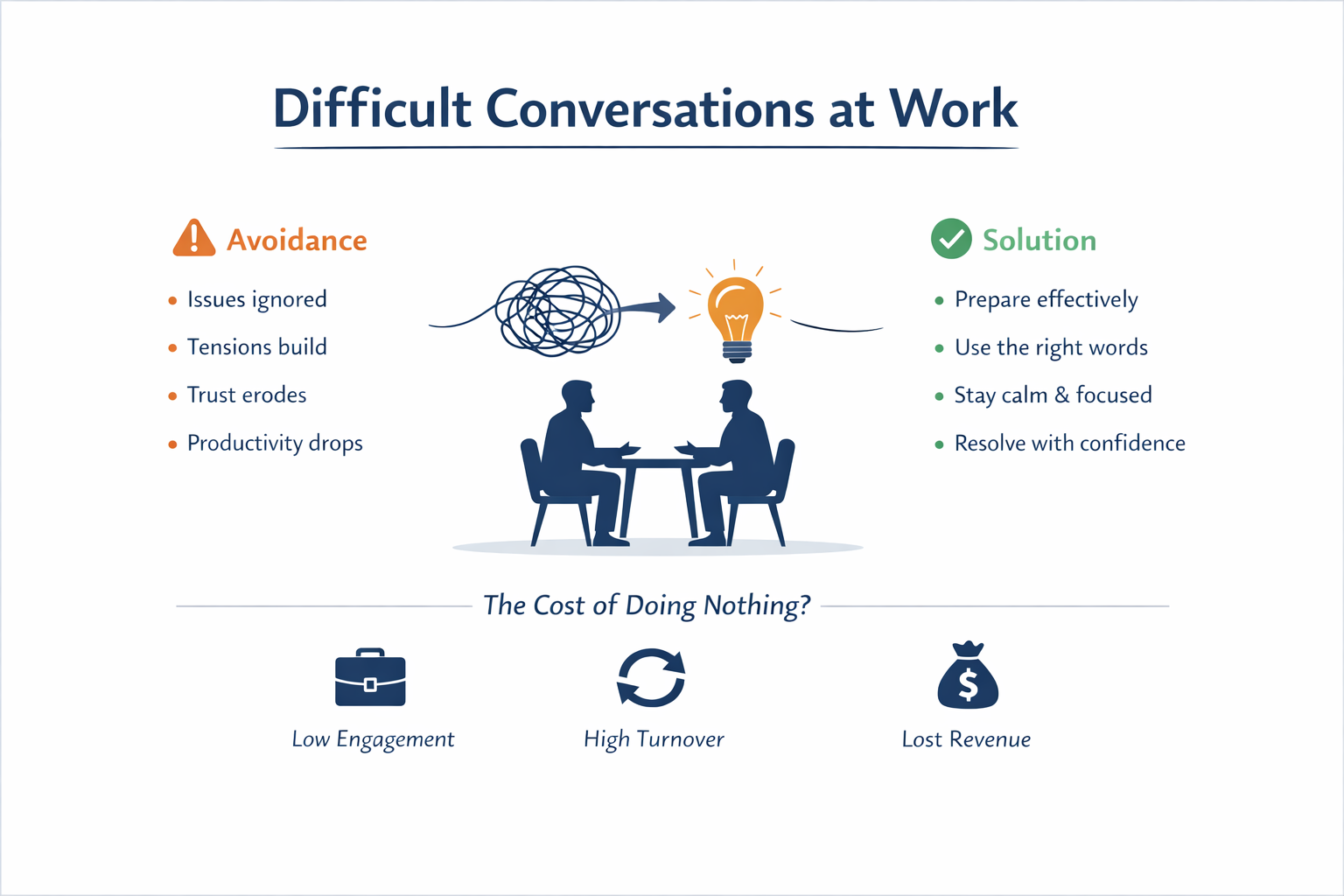
When managers avoid difficult conversations, problems don’t disappear, they evolve.
A missed expectation becomes a performance issue.
A small tension becomes team conflict.
A disengaged employee becomes a resignation.
By the time the issue is addressed, it’s often too late and far more complex.
And perhaps most critically: managers lose credibility.
Avoidance doesn’t protect relationships. It weakens them.
Organizations have tried to solve this: they run training sessions, provide frameworks and feedback models and share guides and templates. But when the real moment comes - when emotions are involved, stakes are high and the conversation is unpredictable - managers are on their own.
Because difficult conversations are not theoretical. They are human, nuanced and dynamic.
Managers don’t need more knowledge, they need support in the moment.
This is where technology is beginning to shift the equation.
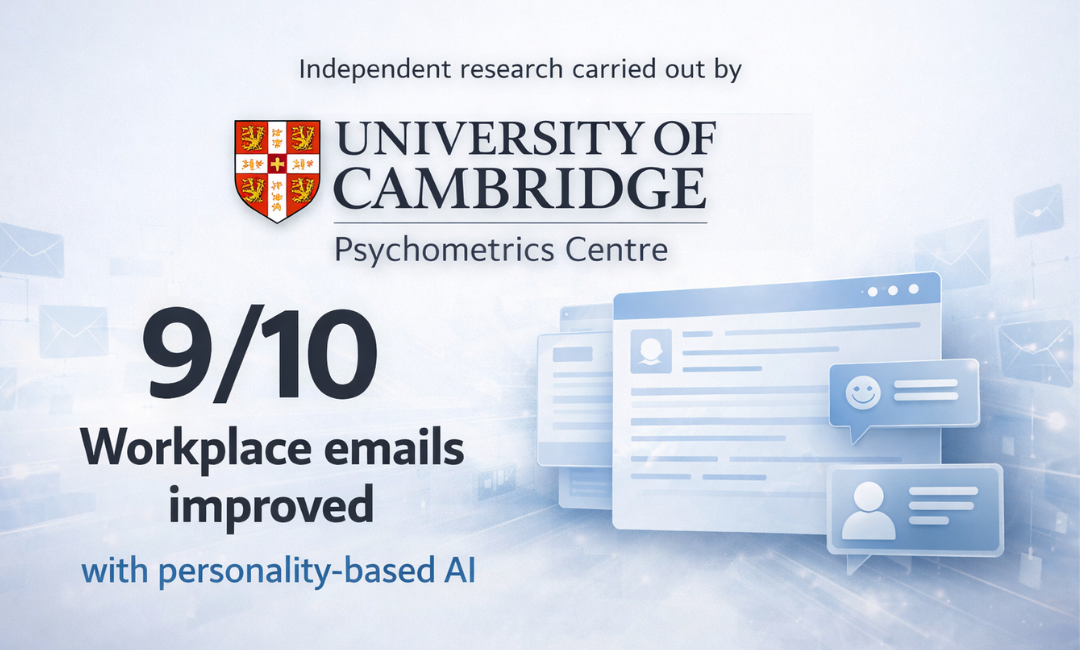
Ask Olivia, an AI workplace coach, was built together with a leading expert from the University of Cambridge, combining science with real-world management challenges.
Rather than offering static advice, it provides real-time, practical support before difficult conversations.
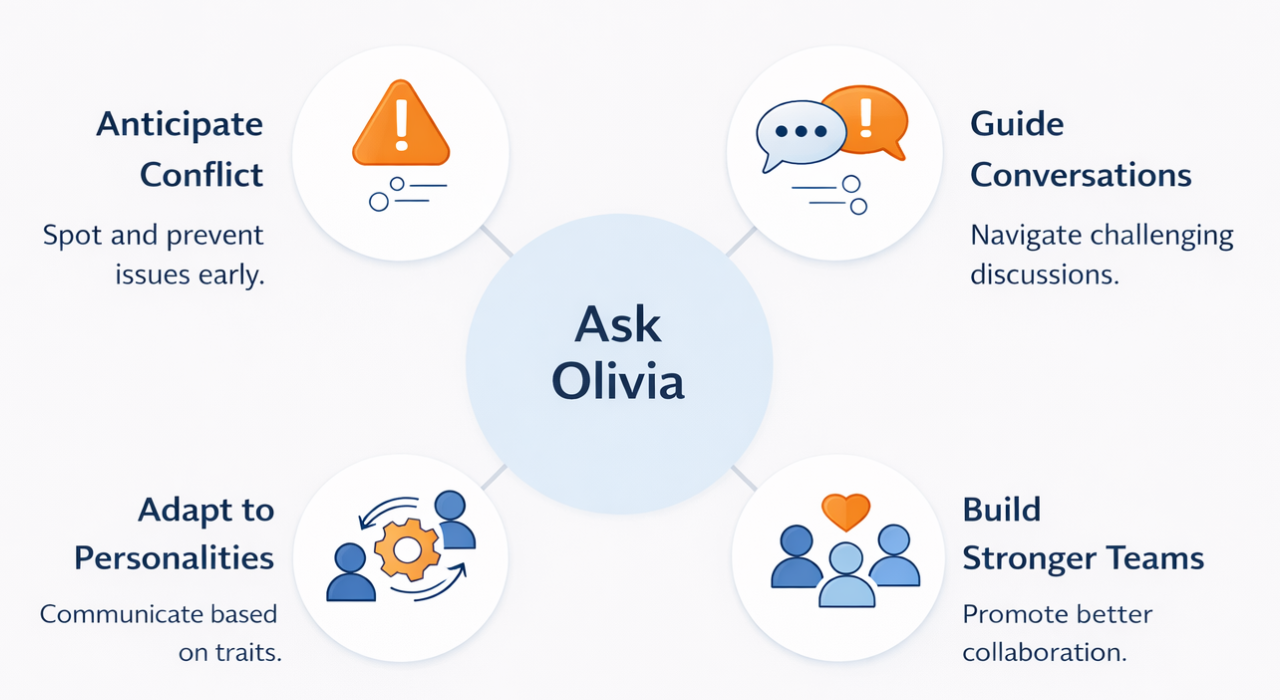
Ask Olivia helps managers move from avoidance to action by supporting them in five critical ways:
1. Clarity before the conversation: Managers can clarify what actually needs to be said-cutting through overthinking and hesitation.
2. The right words, without over complication: It helps translate intent into clear, constructive language.
3. Practice in a safe environment: Managers can rehearse conversations, reducing anxiety and building confidence.
4. Staying calm and constructive under pressure: It reinforces tone, structure and emotional control when it matters most.
One of the biggest reasons difficult conversations fail is not what is said, but how it is said.
Different people respond to different approaches:
Some need directness.
Others need context and empathy.
Some value speed.
Others need space to process.
Ask Olivia is personality-aware, meaning it helps managers adapt their tone, language and angle based on who they’re speaking to.
So the conversation doesn’t just happen - it lands in the right way.
This is where most managers struggle:
Personality-aware support bridges that gap.
The best teams are not conflict-free, they are equipped to handle conflict well.
When managers gain the confidence and skill to have difficult conversations:
And importantly: issues are addressed early, before they become costly.
Difficult conversations are not optional. They are part of leadership.
The question is no longer whether they will happen.
It’s whether managers are equipped to handle them, or whether the cost of doing nothing will continueto grow.
AI can be a powerful assistant for managers navigating difficult conversations - helping them structure what to say, choose the right tone, frame feedback constructively and adapt their approach to different personalities - while always supporting, not replacing, human judgment.
Aligned with ICF AI Coaching Standards, Ask Olivia encourages reflection, builds self-awareness, and supports constructive dialogue. It helps managers approach difficult conversations thoughtfully rather than relying on avoidance or reactive responses.
Used responsibly, AI can help managers:
· Clarify their thinking before addressing sensitive issues
· Anticipate how others may respond and prepare accordingly
· Structure conversations in a clear, respectful, and outcome-focused way
· Adapt tone and communication style based on personality
By combining personality-aware AI insights with your understanding of your people, company values and ethical leadership practices, you can handle difficult conversations in a way that is clear, constructive, and human -building trust, strengthening relationships, and improving team performance.

Yes, because many challenges in difficult conversations come from preparation, clarity and emotional regulation. AI can provide structured, objective guidance in these areas, helping managers approach conversations more effectively while still being human.
Ask Olivia is personality-aware, meaning it adapts guidance based on different communication styles. It helps managers tailor their tone, language, and approach depending on who they’re speaking to - increasing the chances that the message is understood and well received.
Difficult conversations are unpredictable and emotional. Managers need to balance clarity with empathy, stay calm under pressure and adapt to the other person’s reactions in real time. This requires more than theory, it requires practice, awareness and confidence.