Back
New Cambridge Research Finds 9 in 10 Workplace Emails Improved with Personality-Aware AI
Workplace communication is one of the most persistent challenges organisations face. Misunderstandings, friction, and poorly received messages don’t just slow things down and they impact performance, engagement, and retention.
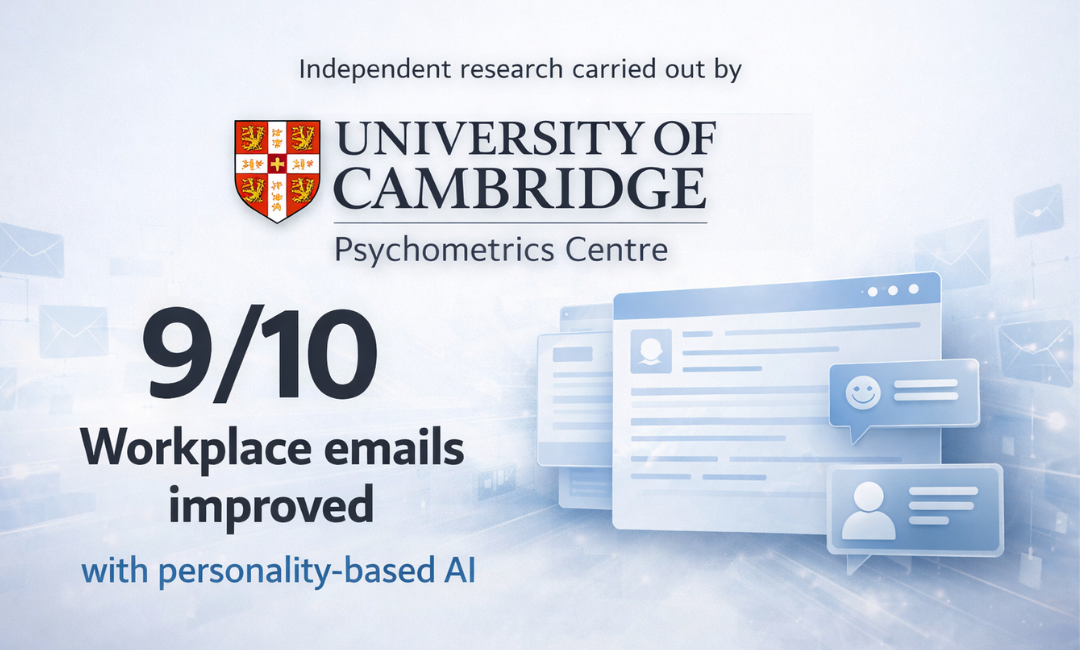
New independent research from the University of Cambridge Psychometrics Centre provides compelling evidence that a more personalised approach to communication can significantly improve outcomes.
Across ten realistic workplace scenarios, emails tailored to the recipient’s personality were rated more effective in 9 out of 10 cases.
This isn’t a marginal gain it’s a consistent, statistically significant improvement across a wide range of everyday interactions.
The research found that using Ask-Olivia's personality-based AI enhanced communication across several critical areas:
These improvements were seen across multiple contexts, including:
Most AI tools today focus on polishing emails, fixing grammar, improving structure, and adjusting tone.
This research shows that effectiveness goes beyond polish.
Personality-based AI introduces a new layer:
The study provides independent scientific validation that:
Tailoring communication to personality profiles leads to measurably better workplace outcomes than standard, one-size-fits-all messaging.
In practical terms, this means organisations can:
As AI becomes embedded in daily workflows, the next evolution isn’t just automation it’s personalisation.
This research highlights a clear shift:
From → generic AI-assisted writing
To → psychologically informed, personalised communication
And the impact is already measurable.

Over 300 participants were included in the study, which is a statistically robust sample for this type of workplace communication research.
Personality‑Aware AI uses information about the people involved such as the recipient’s personality or communication preferences to give tailored guidance. In contrast, Generative AI produces responses based on general patterns in data and does not have context about the specific person the user is communicating with, so its advice is more generic.
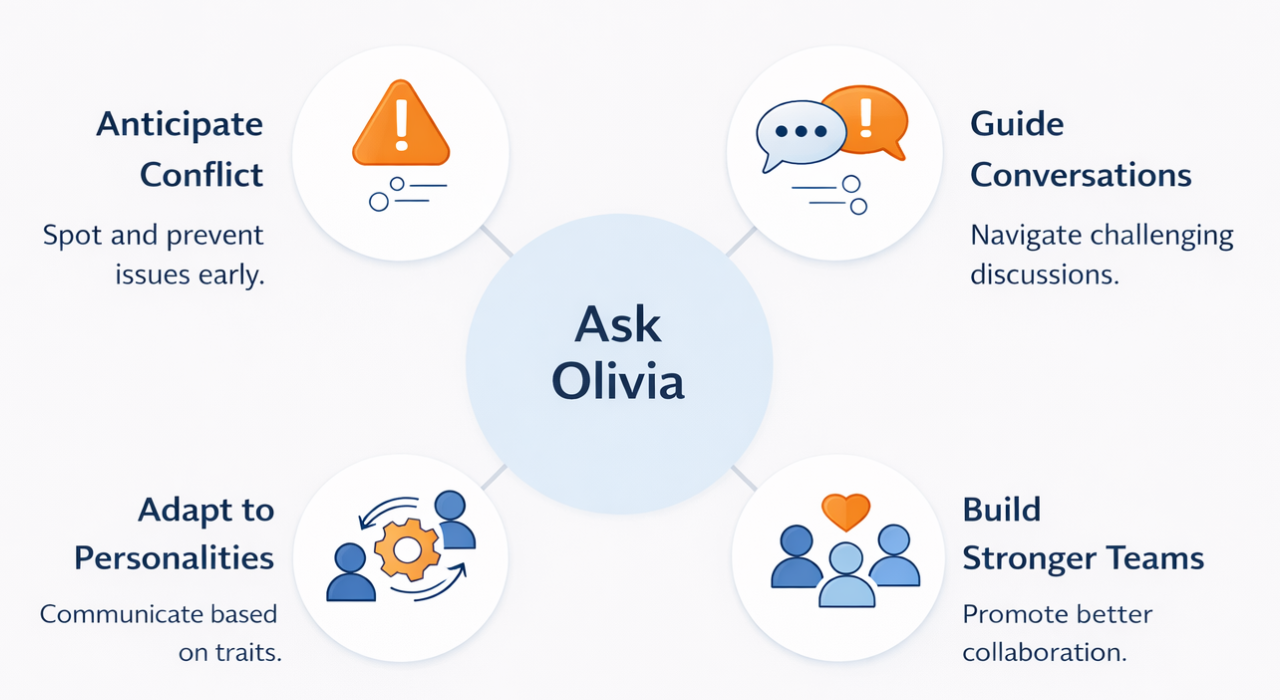
Ask Olivia, the first fully personality‑aware coaching tool, is available via email or chat platform integrations, allowing users to receive real-time guidance while composing messages.