Back
Manager Objectives as Performance Lever

Many managers - particularly first-time managers - step into the role without a clear definition of what “good” looks like. They inherit targets, teams and pressure.
What they rarely receive is clarity around the objectives that truly drive sustainable performance.
And that gap matters.
Research from Gallup shows that managers account for up to 70% of the variance in team engagement.
Engagement is not a soft metric. Highly engaged teams deliver:
If managerial objectives focus only on deliverables and short-term output, organizations miss the single biggest performance lever available to them: how managers lead.
Managers optimize for what is measured.
If they are measured only on revenue, deadlines and cost - they will prioritize execution.
If they are also measured on:
Their behavior changes - and so do team outcomes.
Objective-setting is therefore not administrative, it is behavioral design.
Vague goals such as “improve collaboration” or “be more strategic” create ambiguity, also too many KPIs create overload.
Over time, this leads to:
The cost is not seen immediately - but it accumulates.
High-performing managers operate across three dimensions:
1️. Business outcomes
2. Team health and capability
3️. System improvement (how work actually flows)
Most organizations overemphasize the first and neglect the other two and the result is short-term performance gains at the expense of long-term stability.
Balanced objectives correct this distortion.
The strongest managerial objectives are behavioral.
Examples:
These behaviors drive engagement, efficiency and retention before performance metrics move. Yet they are rarely tracked systematically.
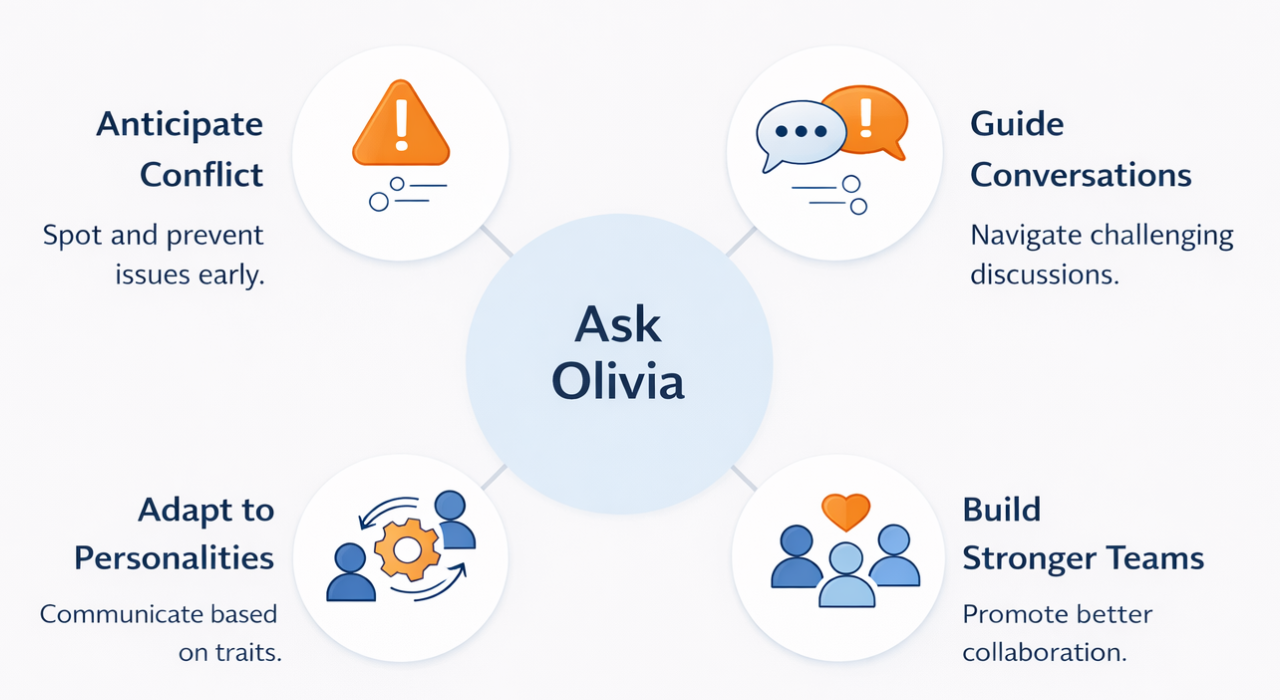
Olivia helps managers:
Rather than adding another performance framework, Olivia strengthens the one that already exists - by making managerial behavior visible and coachable in real time.
Manager objectives are not a formality, they determine where attention flows, which behaviors are rewarded and whether performance is sustainable.
For organizations seeking stronger retention, healthier teams and consistent results, redesigning managerial objectives and supporting them with continuous coaching, is not optional.
It is strategic.
Ask Olivia follows the ICF AI Coaching Standards, ensuring the coaching approach respects recognised professional principles.
The system is designed to encourage reflection, promote self-awareness and support constructive workplace conversations - key elements of effective coaching.

Behavioral objectives are leading indicators of performance. Improvements in communication, feedback, clarity and conflict resolution often drive stronger engagement and productivity before financial or operational metrics change.
AI workplace coaches like Olivia can help managers translate company strategy into actionable objectives, identify patterns in team dynamics, surface early signs of friction and provide ongoing coaching prompts to support better leadership behaviors
Managerial objectives should ideally be reviewed quarterly, with regular check-ins during the year. Continuous feedback helps managers adjust behaviors early rather than waiting for annual performance reviews.