Back
When Recognition Backfires - And How To Get It Right
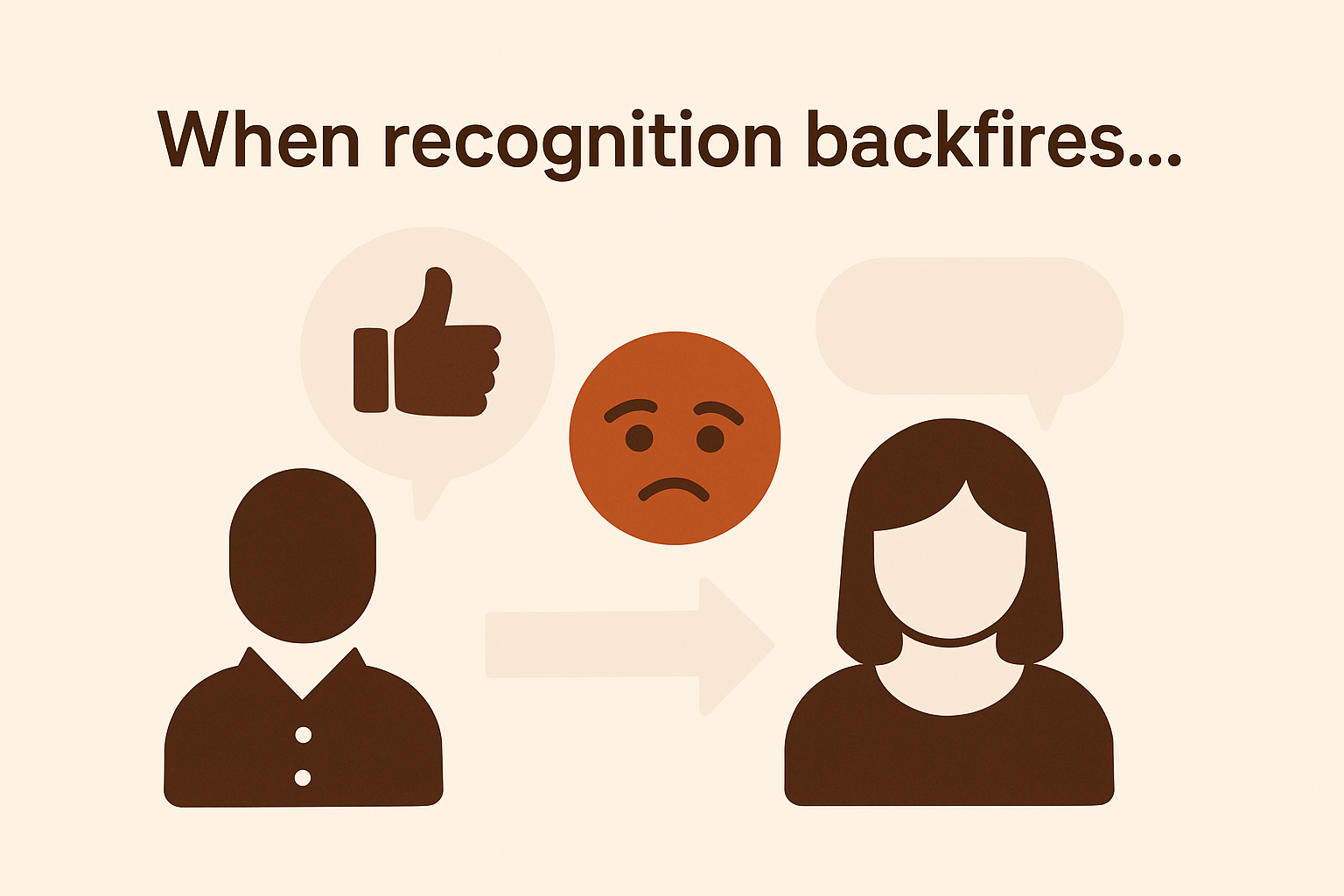
Most managers want to do the right thing. They want their people to feel valued, motivated and appreciated.
So they give recognition - a shout-out in a meeting, a message in the team chat, a “great job” delivered with enthusiasm.
But here’s the catch: Recognition is only effective when it’s delivered in a way the other person can truly receive it.
And when it isn’t? The exact opposite of what you intended can happen.
We often assume that what feels motivating to us feels motivating to others.
But people vary enormously in how they like to be recognised:
When these preferences are unknown, managers take their best guess, and even with the best intentions, guesswork can lead to misalignment - the kind that leaves employees feeling misunderstood rather than appreciated.
Recognition that doesn’t land well can unintentionally:
It’s not because the manager doesn’t care. It’s because they don’t yet have the insight to tailor appreciation to each person.
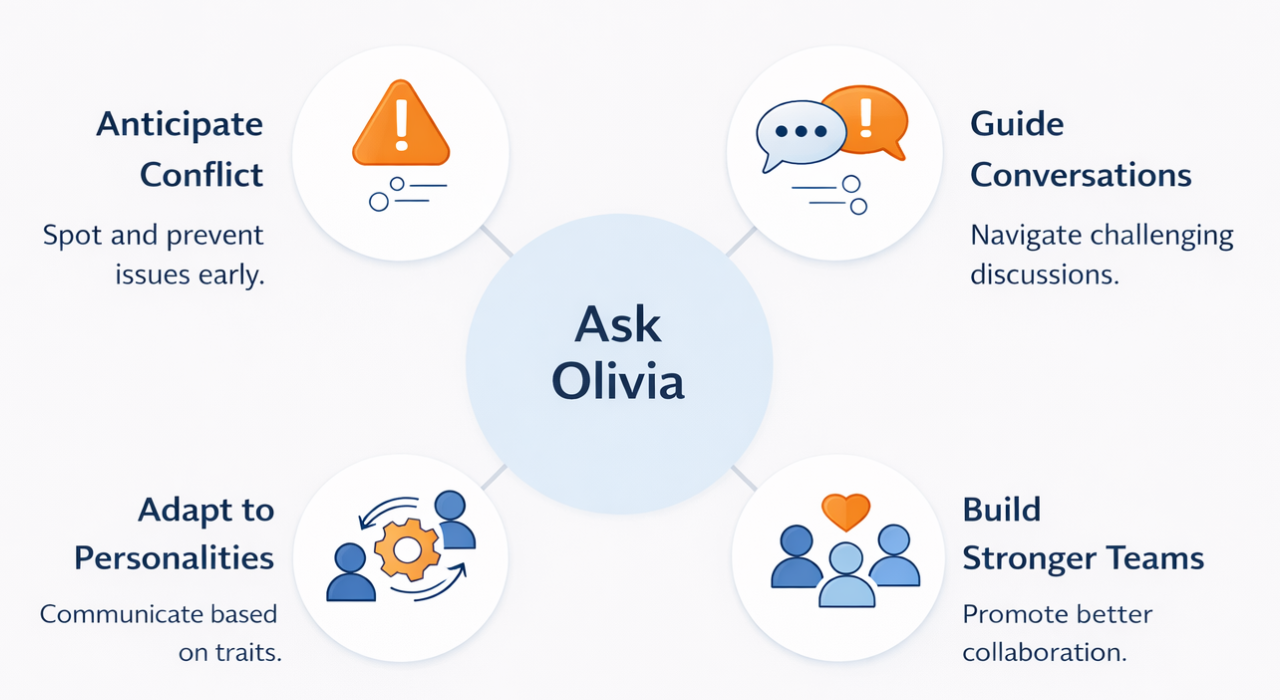
Ask-Olivia helps managers move from guesswork to precision.
She gives clear insight into:
Armed with this understanding, managers can deliver appreciation in the right format, at the right moment, with the right tone, so it actually lands.
Recognition stops being a generic gesture and becomes something meaningful:
Everyone receives recognition in the language that motivates them most.
Recognition is powerful - but only when it’s personalised.
Olivia gives managers and teams the clarity they need to make appreciation authentic, motivating, and effective.
Stop guessing how people want to be recognised: Ask-Olivia and get it right every time.

Absolutely. When recognition feels personal and respectful, employees report higher engagement, stronger trust in management and greater motivation. Tailored recognition isn’t a “nice-to-have” - it directly affects performance and retention.
No. Olivia is designed to be simple, intuitive and immediately useful. Managers can ask questions in natural language and get practical, actionable insights on the spot.
Most managers rely on guesswork or assume others appreciate recognition the same way they do. With limited time and many personalities to understand, it’s easy to get it wrong - even with the best intentions.